

As the demand grows for packaging solutions that balance sustainability with performance and cost-efficiency, molded pulp packaging is emerging as a compelling alternative to traditional materials. Long used in simple applications like egg cartons, it has evolved into a versatile, high-performance solution for industries ranging from electronics to healthcare.
Today’s molded pulp offers reliable protection, production flexibility, and material efficiency, making it suitable for both mass-market and precision packaging needs. For manufacturers and packaging buyers, it represents an opportunity to reduce environmental impact without sacrificing durability or functionality.
This blog explores what molded pulp packaging is, how it’s made, and why it’s becoming a practical choice for businesses looking to optimize both performance and sustainability.
What Is Molded Pulp Packaging?
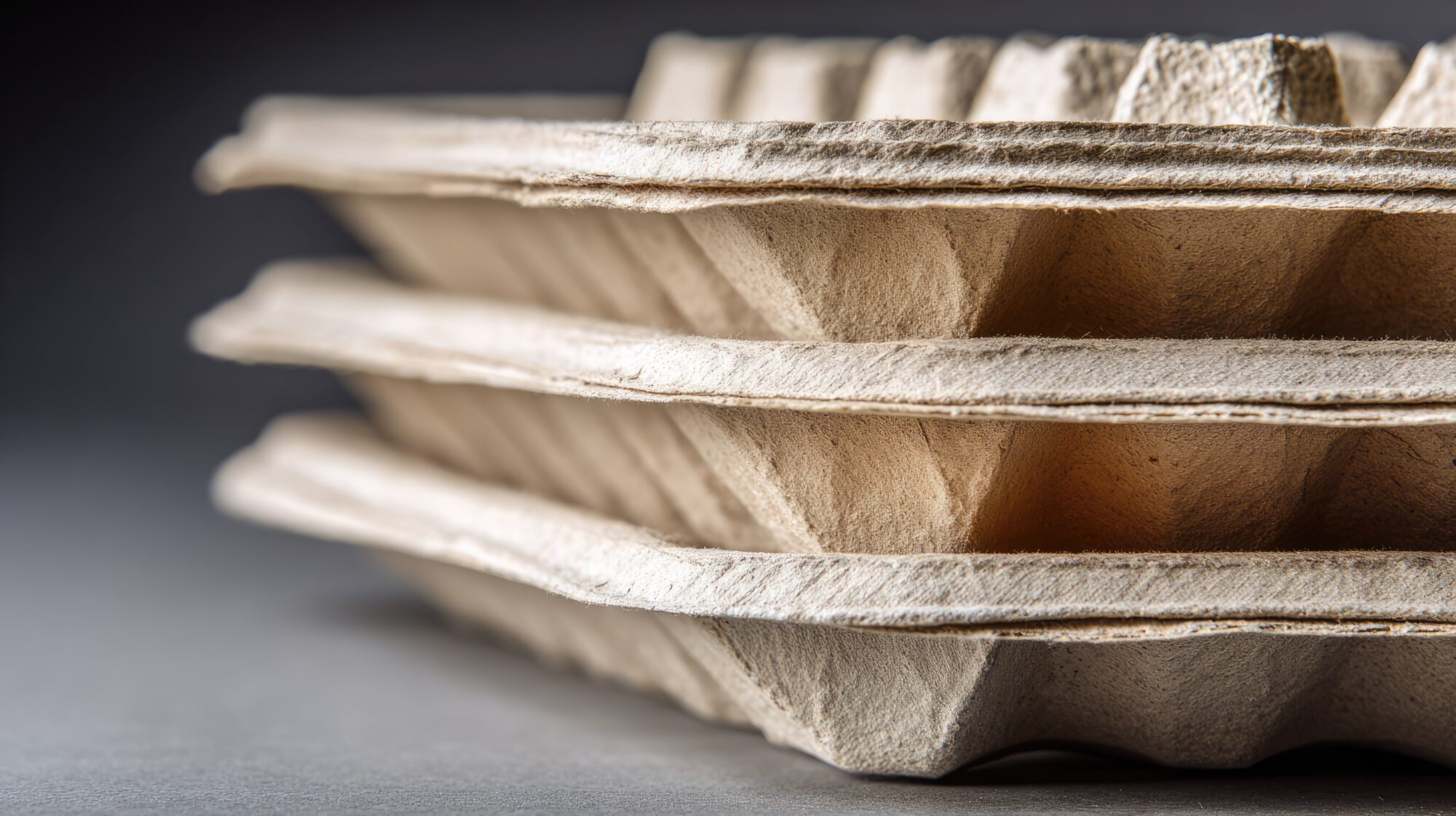
Molded pulp is a durable, fiber-based packaging material made primarily from recycled paperboard, newsprint, or other renewable natural fibers. It’s formed using a wet molding process that shapes pulp into precise structures, then dries it to create rigid, shock-absorbent packaging components.
Unlike traditional plastic or foam packaging, molded pulp is fully recyclable, compostable, and often made from post-consumer waste; making it both eco-conscious and cost-effective. It offers similar protective performance to expanded polystyrene (EPS) or thermoformed plastics, but without the long-term waste or regulatory challenges.
Molded pulp can be manufactured into various forms to suit different products and industries, including:
- Trays for electronics, produce, and medical kits
- Clamshells for retail-ready packaging
- Inserts for cosmetics, tools, or fragile goods
- Carriers for beverages or multipacks
Manufacturers and packaging buyers choose molded pulp not only for its sustainability, but for its structural strength, form-fitting protection, and alignment with brand values – particularly in sectors where environmental responsibility and customer perception are critical.
How Molded Pulp Packaging Is Made
Beyond sustainability, one of the key advantages of molded pulp packaging is the control and efficiency built into its production process. From raw materials to finished form, each step allows manufacturers to achieve consistent quality and performance across a wide range of applications.
Raw Materials & Pulping
The process begins with recycled paperboard, newsprint, or natural fibers such as bagasse (sugarcane waste) or bamboo. These materials are shredded and mixed with water to create a pulp slurry which is a fibrous, wet mixture that serves as the base for molding.
This step enables the use of post-consumer waste while maintaining material flexibility and cost control.
Forming & Molding
The pulp slurry is then shaped using vacuum forming or thermoforming techniques, depending on the required product design. A forming tool (mold) draws in the pulp to create precise shapes from trays to inserts.
There are three primary mold types used:
- Thick-wall molding for heavy-duty protection (e.g., industrial parts)
- Transfer molded for packaging with more refined detail and texture
- Thermoformed thin-wall for lightweight, high-precision applications (e.g., electronics or cosmetics)
This stage offers a high degree of customization and ensures a secure fit around the packaged product.
Drying & Finishing
Once formed, the wet pulp is dried using hot presses or ovens, then trimmed and, if needed, finished with water or oil-resistant coatings to enhance performance.
The final product may undergo quality checks for rigidity, dimensional accuracy, and moisture resistance, ensuring it meets industry standards for protection and presentation.
Types & Applications of Pulp Mold
Molded pulp packaging is highly adaptable, offering solutions that span protective transit packaging to premium retail presentations. Here’s a few ways molded pulp is used today:
Protective Packaging
Used to protect products during shipping and handling, molded pulp offers shock absorption and secure fit.
- Custom trays and inserts for electronics, automotive parts, and fragile goods
- Molded pulp replacing EPS or foam for sustainability
- Heavy-duty molded pulp used for large components and parts (up to multi-ton loads)
Service-ware & Consumer Packaging
Widely used in food service and consumer-facing applications where sustainability and presentation matter.
- Food-service trays and cup carriers for restaurants and cafes
- Clamshell containers for takeaway meals and produce
- Retail packaging shells for cosmetics, electronics, and personal care products
Custom Shapes & Inserts
Tailored for brand presentation, gift sets, and premium packaging needs.
- Branded trays and inserts for consumer electronics or kits
- Custom shapes for gift boxes, subscription products, and promotional sets
- Finishing options like silkscreen printing, embossing, or foil to enhance visual appeal
Key Benefits of Pulp Mold for Manufacturers and Brands
Molded pulp delivers measurable business advantages in production, cost control, design flexibility, and regulatory compliance. Here’s how it supports manufacturers and brand owners at every stage.
Manufacturing Efficiency
Molded pulp production uses a straightforward process with consistent fiber inputs, making it easier to manage and scale than plastic or foam alternatives. Molds are less complex and can be developed more quickly, reducing lead times and enabling faster product launches.
For brands managing multiple SKUs or seasonal packaging, this translates into shorter development cycles, fewer delays, and faster packaging adjustments when product dimensions or formats change.
Cost & Material Management
With pulp made from recycled or renewable fibers, raw material costs are significantly lower than plastic or virgin materials. Additionally, molded pulp packaging is fully recyclable and compostable, minimizing disposal fees and avoiding regulatory costs tied to plastic waste or landfill use.
For manufacturers operating at scale, this can deliver savings across procurement, waste handling, and compliance; especially in regions where EPR or plastic taxes are enforced.
Design Flexibility
Molded pulp supports a high degree of design freedom. Whether you need precision-fit inserts for electronics or custom-shaped packaging for premium retail, the material can be tailored to your exact requirements. Brands can also emboss logos, product details, or QR codes directly into the packaging; eliminating the need for excess labeling or printing.
It’s equally suited for high-volume manufacturing or short-run, specialized projects, giving businesses the flexibility to scale packaging operations based on demand.
Recyclability & Compliance
Molded pulp packaging is 100% recyclable through existing paper recovery streams, making it an easy fit for businesses aiming to meet sustainability targets, ESG commitments, or government recyclability mandates.
With growing pressure from retailers, consumers, and regulators to shift away from single-use plastics, molded pulp offers brands a low-risk, high-compliance solution that aligns with both environmental goals and customer expectations.
What’s Holding Pulp Back — And What’s Pushing It Forward
While molded pulp packaging offers a strong balance of sustainability and performance, like any material, it comes with certain limitations. The industry, however, is rapidly innovating to overcome these barriers, making pulp packaging more viable and competitive than ever.
Challenges Facing Molded Pulp in Today’s Market
Molded pulp can be limited by its natural sensitivity to moisture, which may impact its suitability for certain wet or high-humidity environments. While it offers solid structural performance, it doesn’t inherently provide the same barrier properties as plastic.
There’s also an upfront cost associated with mold design and tooling, especially for custom shapes or high-detail components. For smaller production runs, this can present a challenge unless paired with scalable or modular mold solutions.
New Advances That Are Closing the Gap
To address these limitations, manufacturers are introducing bio-based coatings that add water and oil resistance without compromising recyclability. These coatings enable pulp packaging to enter food, cosmetic, and personal care applications where moisture control is critical.
Advancements in thermoforming techniques are also improving surface quality, enabling smoother finishes suitable for luxury or premium retail packaging.
Additionally, molded pulp is being integrated with smart labeling technologies including embedded QR codes and recycling markers to align with digital supply chains and circular tracking systems.
Ready to Rethink Your Packaging Strategy?
Molded pulp packaging offers a compelling blend of structural strength, design flexibility, and recyclability, making it a modern packaging solution for forward-thinking businesses.
For manufacturers and brands, the benefits are tangible: lower material waste, enhanced brand perception, and compliance with evolving environmental regulations. With new innovations addressing previous limitations, molded pulp is no longer just an eco-friendly option but a high-performance one.
Explore custom molded pulp solutions tailored to your product’s protection, presentation, and sustainability needs.