

We’ve been trained to see packaging through the lens of end results: recyclability, carbon footprint, compliance. But what if we shifted the focus to the system itself to how we design, produce, and recover packaging from the very start?
Mono-material packaging isn’t just a greener option. It’s a smarter, leaner, and more strategic way to build packaging that works with the system and not against it.
By using a single base polymer, mono-material designs simplify recycling streams, eliminate material incompatibility, and unlock better recovery rates. But they also do something else: they reduce production complexity, improve sealing consistency, and make packaging lines more efficient.
Let’s explore how mono-material packaging isn’t just a solution for recyclers, but a breakthrough for manufacturers, packaging designers, and brands looking to future-proof their packaging systems.
What Is Mono-Material Packaging?
Mono-material packaging is made using a single type of polymer – such as PE (polyethylene), PP (polypropylene), or PET (polyethylene terephthalate) – rather than combining different materials in layered structures. This makes the entire packaging unit easier to recycle, more consistent in performance, and better suited for modern recovery systems.
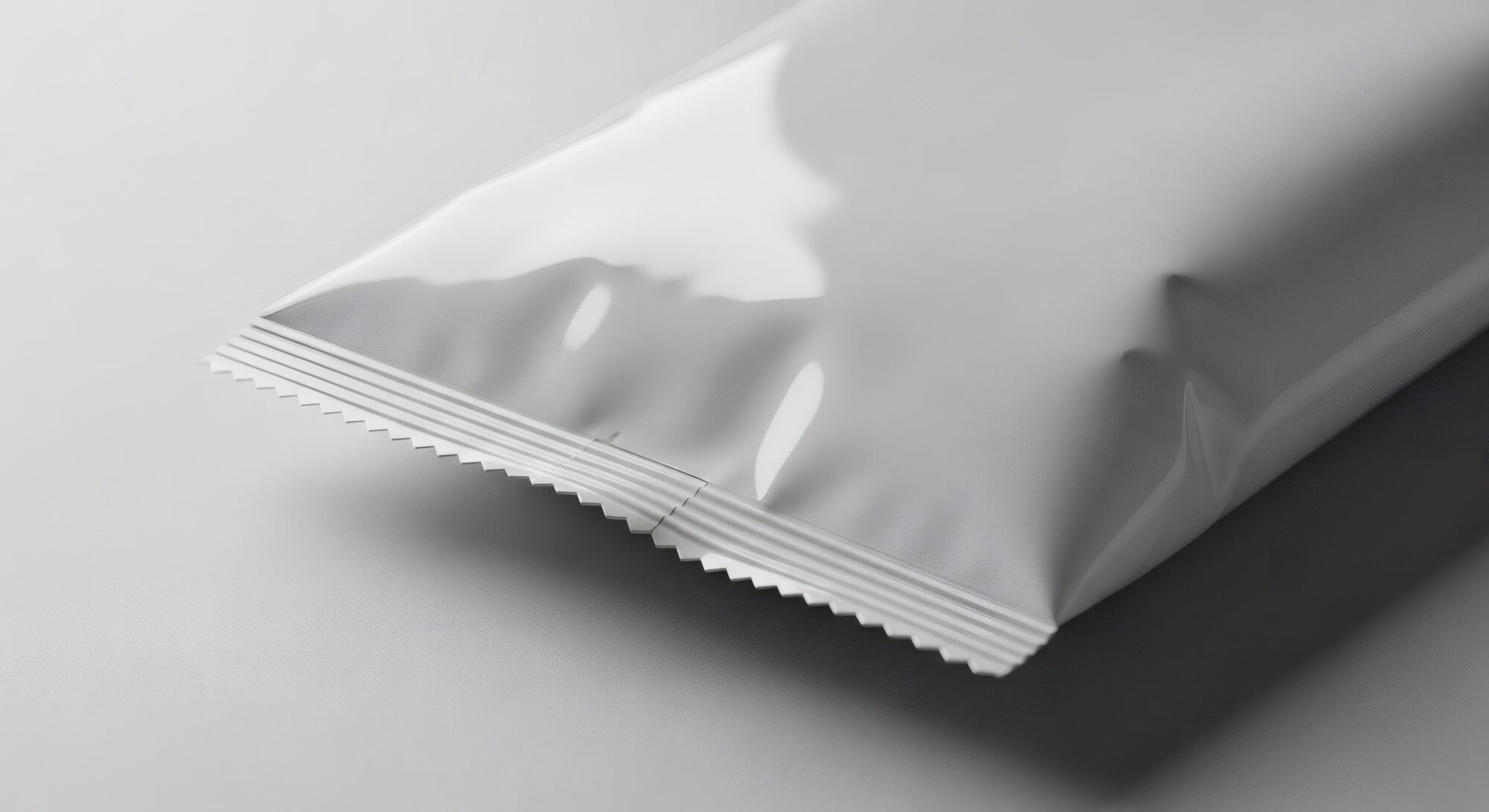
In contrast, multi-material packaging (like a snack wrapper made from layers of plastic and aluminum) is notoriously difficult to recycle. These mixed layers often require energy-intensive separation processes — or end up in landfills because they can’t be effectively recovered.
By sticking to one base material, mono-material designs:
- Streamline recycling and sorting processes
- Offer predictable sealing, barrier, and mechanical behavior in production
- Support circular economy initiatives by enabling closed-loop systems
As regulations tighten and sustainability targets rise, industries from food and beverage to personal care and e-commerce are adopting mono-material solutions not just for compliance, but for long-term packaging efficiency and future readiness.
The 3 Most Common Types of Mono-Material Packaging
Mono-material packaging comes in various forms, each tailored to specific applications depending on the required strength, flexibility, and barrier performance. Below are the most widely used types:
-
Mono-PE (Polyethylene)
Mono-PE is a soft, flexible material commonly used in pouches, sachets, film wraps, and shrink films. It offers excellent moisture resistance, good sealing properties, and a low melting point, making it ideal for high-speed packing lines. It’s widely used in personal care, frozen foods, and detergent refills where flexibility and light barrier needs are key.
Characteristics for Packaging:
- Excellent flexibility and ductility: ideal for films and wraps
- Low melting point (~110–130°C): great for sealing but limits heat resistance
- Non-polar structure: naturally repels moisture but has weak gas barriers
- Soft seal edges: easy to weld in high-speed packaging machines
-
Mono-PP (Polypropylene)
Mono-PP offers a balance of rigidity and clarity, often found in lidding films, yogurt cups, thermoformed trays, and rigid tubs. It has higher heat resistance than PE, making it suitable for microwaveable or hot-fill applications. Its high gloss and stiffness make it feel more premium, and it’s easier to recycle than multi-material trays.
Characteristics for Packaging:
- Higher melting point (~160–170°C): suitable for hot-fill and microwave use
- More rigid and transparent than PE: ideal for lidding films and trays
- Better chemical resistance and surface gloss
- Slightly less flexible, but great for forming durable, shape-retaining formats
-
Mono-PET (Polyethylene Terephthalate)
Mono-PET is best known for its high clarity, strength, and thermal stability. It’s the standard for bottles, food trays, and blister packs where product visibility and durability are essential. PET’s excellent dimensional stability at higher temperatures makes it a solid choice for ovenable or re-heatable packaging, and it’s widely accepted in recycling systems globally.
Characteristics for Packaging:
- High melting point (~250°C): suitable for ovenable trays or hot-fill bottles
- Excellent tensile strength and dimensional stability
- Naturally transparent and glossy: ideal for visual packaging
- Stiffer and less flexible than PE and PP, but offers superior barrier properties
- Highly recyclable in bottle form (PET is a preferred recycling stream globally)
Here’s a quick comparison table between each type of mono material packaging:
| Material | Structure & Feel | Best For | Strengths | Considerations |
| Mono-PE | Soft, flexible | Pouches, sachets, wraps | Sealability, moisture barrier, lightweight | Less heat resistance |
| Mono-PP | Semi-rigid, glossy | Trays, lidding films, rigid containers | Heat resistance, transparency, strength | Moderate flexibility |
| Mono-PET | Rigid, clear, durable | Bottles, trays, blister packs | Clarity, thermal stability, recyclability | Rigid, not suitable for all formats |
How Mono-Material Packaging Differs from Multi-Material Packaging
Traditional multi-material packaging is often made by laminating different layers of plastics — or even mixing plastic with non-plastic materials like aluminum to achieve specific performance traits such as barrier protection, stiffness, or heat resistance. Examples include:
- Aluminum-plastic laminates (e.g., toothpaste tubes, snack packs)
- PET-PE films (e.g., high-barrier pouches for wet food or pet food)
While effective in performance, these combinations come with a major drawback: Each layer has different chemical properties and melting points, making separation difficult and recycling inefficient or even impossible in many systems.
Mono-material packaging solves this by using a single polymer type throughout, simplifying recycling, ensuring uniform behavior in production, and reducing waste. Because the entire package melts and behaves consistently, it can be directly reprocessed without separation.
This shift enables:
- Faster processing
- Cleaner recycling output
- Lower production complexity and waste
Key Benefits for Manufacturers and Brands
While sustainability is often the headline, the real power of mono-material packaging as mentioned is in its ability to simplify production, boost efficiency, and future-proof brands; all while staying aligned with circular economy goals.
Here’s how it delivers across the board:
Manufacturing Efficiency
Mono-materials simplify production by eliminating the need to bond incompatible layers. Using a single polymer base streamlines extrusion, lamination, and sealing processes, resulting in fewer adjustments and higher line stability.
This not only reduces production complexity but also minimizes downtime. Packaging lines benefit from faster transitions between formats such as switching from films to pouches or trays since the material behavior remains consistent throughout.
Material Innovation and Barrier Technologies
Thanks to ongoing research and development, mono-materials are no longer limited in function. Advanced coatings such as EVOH, plasma treatments, or oxide layers now allow single-material films to achieve high-performance barriers previously possible only with multi-layer laminates.
This means brands can maintain product protection and shelf-life standards without sacrificing recyclability. A strong example is mono-PE film with barrier coatings, which is now used in coffee and snack pouches that once required aluminum layers.
Cost Management and Recyclability
Mono-material packaging supports more cost-effective operations in both production and post-consumer recycling. Since the materials are compatible with single-stream recycling systems, they reduce the need for specialized waste handling.
This leads to lower environmental compliance costs and fewer penalties under extended producer responsibility (EPR) schemes. On the supply side, fewer material types simplify inventory and procurement, while in-house scrap can be more easily reprocessed into usable feedstock.
Design Flexibility
The structural consistency of mono-materials enables thinner films and lighter packaging formats without compromising durability. Improved seal integrity and print performance enhance shelf appeal and reduce failure rates.
Mono-material flexibility also makes it easier to adopt innovative packaging formats like refill packs or returnable containers that align with emerging sustainability models and circular design strategies.
Regulatory Readiness
With recycling laws tightening globally, mono-material packaging is a future-proof solution. It meets current recyclability criteria under EPR and packaging waste regulations in regions like the EU and ASEAN.
For brands exporting internationally or working with global retailers, adopting mono-materials signals a proactive approach to compliance: a competitive advantage in sustainability-driven markets.
Applications of Mono Material Packaging Across Industries
Mono-material packaging is gaining traction across multiple sectors. By replacing complex laminates with single-polymer structures, companies are simplifying waste streams, improving processing efficiency, and preparing for a circular packaging future.
Food & Beverage
Brands are replacing traditional laminates with recyclable mono-materials that meet barrier needs and streamline production.
- Snack pouches and coffee bags made with barrier-coated mono-PE
- Frozen food films using mono-PP for low-temp durability
- Improved recyclability reduces landfill-bound packaging waste
- Compatible with food-grade recycling streams
Personal Care & Household
Flexible mono-materials deliver durability and branding while simplifying recycling for high-volume consumer products.
- Refill packs and detergent pouches in mono-PE for easy sealing
- Cosmetic tubes and flexible sachets using mono-PP structures
- Lower material variety simplifies procurement and waste handling
- Supports refill and reuse models gaining popularity
Medical & Pharmaceutical
Sterile-ready mono-materials help maintain safety while easing disposal and aligning with sustainability targets.
- Mono-PET blister alternatives and mono-PP sterile wraps
- High heat resistance and barrier protection
- Reduces reliance on hard-to-recycle PVC or aluminum structures
- Ensures consistent performance for regulated environments
E-Commerce & Retail
Mono-material mailers and wraps reduce contamination and fit better into established recycling infrastructure.
- Shipping mailers made from recyclable mono-PE
- Void-fill and protective films designed for single-stream recycling
- Enhances brand responsibility without added packaging complexity
- Prepares logistics partners for upcoming recycling mandates
An important note is that mono-material packaging isn’t just gaining traction across industries now, it’s also built for what’s next. Its uniform structure aligns with AI-powered sorting, recyclable-by-design regulations, and the rise of chemical recycling technologies, making it a practical, future-ready solution for brands aiming to balance performance, compliance, and circularity.
Streamlining the Path to Recyclability
For manufacturers and brand owners, mono-material packaging is a business-smart solution. It streamlines production, reduces waste, simplifies recycling, and ensures compliance with rapidly evolving packaging regulations. As global markets demand more efficient, standardized, and circular packaging systems, adopting mono-materials is becoming a key driver of long-term competitiveness.
Partner with Flexipack to develop innovative mono-material packaging solutions that meet your performance, efficiency, and recycling goals without compromise today.
Frequently Asked Questions on Mono-Material Packaging
- What exactly is mono-material packaging?
Packaging made entirely from one polymer type, making it easier to recycle and process compared to mixed-material designs. - Can mono-material packaging still include coatings or films?
Yes — as long as the coatings or layers are compatible with the main polymer (e.g., PE-based coatings on PE films), it can still be classified as mono-material. - Is mono-material packaging suitable for food products?
Absolutely. With new barrier coatings, mono-material structures can maintain freshness and protection comparable to multilayer laminates. - What are the main types of mono-material packaging?
Common types include mono-PE, mono-PP, and mono-PET — each with distinct strengths suited to flexible or rigid packaging. - What are the advantages for manufacturers?
Easier recycling, simplified production, better material consistency, and compliance with recyclability regulations. - Are there any downsides?
Some mono-materials have lower barrier protection, but ongoing innovation in coatings and additives is closing that gap quickly.
7. How can my company start adopting mono-material packaging?
Audit your current packaging layers, consult with your packaging supplier for compatible mono-material options, and test prototypes for sealing and shelf-life performance.